![Pop [Punk] Psychology](https://substackcdn.com/image/fetch/$s_!KtCR!,w_120,h_120,c_fill,f_webp,q_auto:good,fl_progressive:steep/https%3A%2F%2Fsubstack-post-media.s3.amazonaws.com%2Fpublic%2Fimages%2F5743faea-07fe-4a5f-9402-3e61474152fa_913x913.png)
Smashing Learned Helplessness
Getting up from the Landslide with girlfriends (the band)

The Concept: Learned Helplessness
The Track: “Landslide” by girlfriends
The Landslide
Picture this: You’ve spent three months pouring your soul into a massive strategic presentation. You’ve cross-referenced data, aligned stakeholders, and missed a few family dinners to get it perfect. You walk into the boardroom, project the first slide, and three minutes later, a senior executive cuts you off.
“We’re restructuring next week. This entire project is being shelved. Good effort, though.”
Just like that, you’re flat on your back. Your email inbox is overflowing, your calendar is a wall of pointless meetings, and you feel entirely paralyzed. You look at your laptop screen and think, “Why do I even bother trying? Nothing I do makes a difference anyway.”
Congratulations. You’ve just entered the psychological state known as learned helplessness.
The Concept: Learned Helplessness
In the late 1960s, psychologists Martin Seligman and Steven Maier discovered a profound quirk in how animals — and humans — handle repeated stress. They found that when subjects are subjected to negative events they cannot escape or control, they eventually stop trying to escape altogether, even when the environment changes and escape becomes easy. (read that again: even when the environment changes and escape becomes easy).
They “learn” that they are helpless.
In a modern workplace or life crisis, learned helplessness looks like:
Passivity: Letting bad processes or poor treatment happen without speaking up.
Decreased Motivation: Doing the absolute bare minimum because “it won’t matter anyway.”
Cognitive Distortion: Believing that failure is a) permanent (“it will always be like this”) and b) pervasive (“my whole career is ruined”).
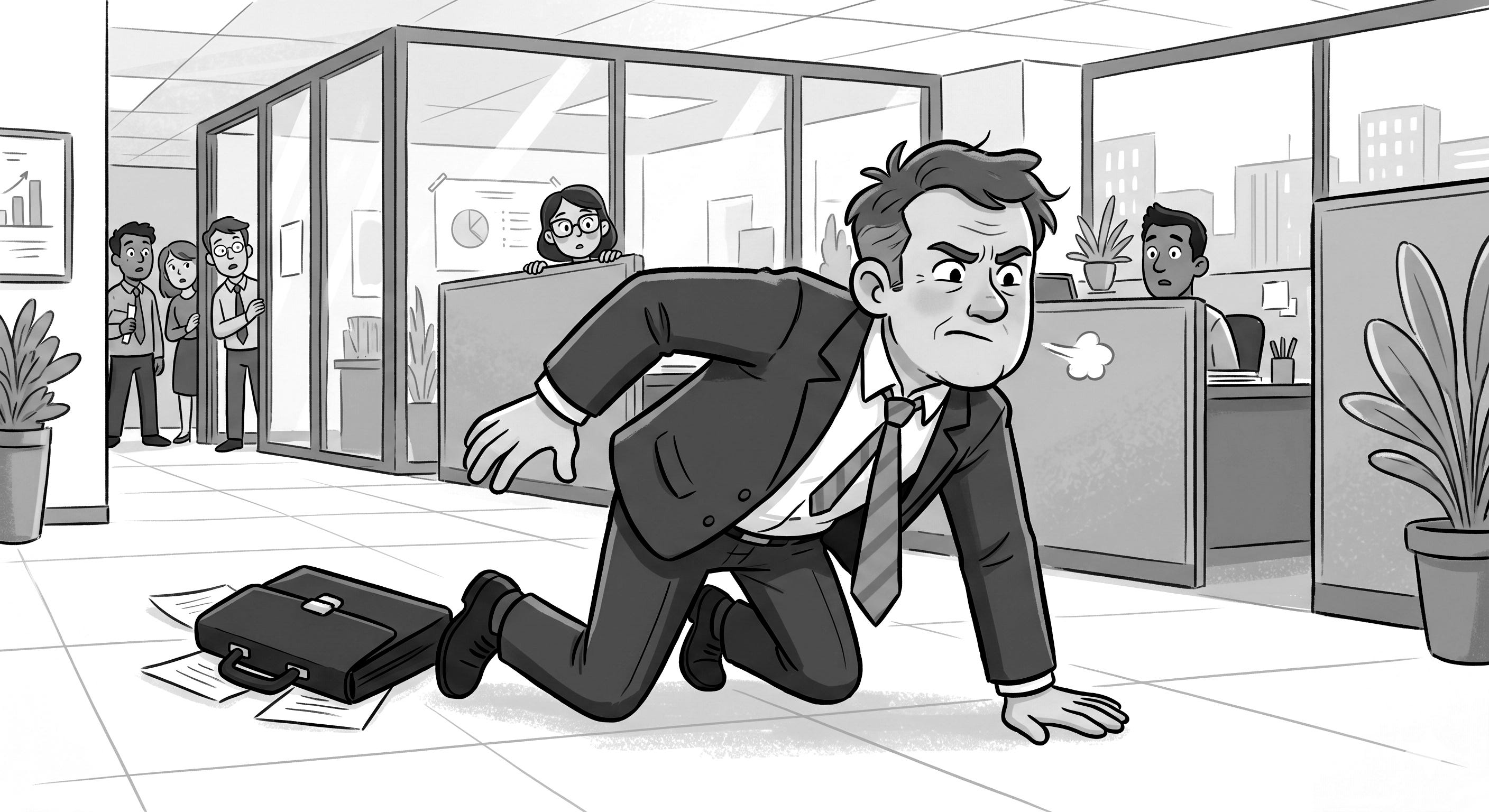
It’s the psychological equivalent of being knocked to the ground with your hands tied behind your back.
The Action Point: girlfriends to the Rescue
This brings us to the cathartic, stadium-sized therapy session that is “Landslide” by the pop punk duo girlfriends. They map this exact cognitive trap out perfectly, before giving us the ultimate musical middle finger to defeatism:
Knocks you up & down until you’re on the ground with your hands tied
Behind your back & you can’t get out
The good news is I’m bruised but I’m breathing
The first two lines describe classic learned helplessness. You are pinned, immobilized, and the exit is blocked. But look at the pivot in the third and fourth lines.
The phrase “The good news is I’m bruised but I’m breathing” is a radical act of cognitive reframing. It acknowledges the physical and emotional toll (“bruised”), but immediately shifts the focus to a foundational fact of survival (“breathing”).
And then comes the sledgehammer line that smashes learned helplessness entirely: “And I’m here for a damn good reason.”
When a professional or personal landslide hits, you don’t overcome learned helplessness by magically fixing everything overnight. You do it by restoring your internal locus of control — the belief that YOU have power over your actions.
Here is how you untie your hands:
Start by focusing on "micro-choices" — small, highly manageable tasks where your actions have an immediate, guaranteed impact.
Next, challenge the cognitive trap that failure is permanent or all-encompassing… isolate the setback to a single event rather than your entire life or career.
By consistently proving to your brain that your choices still matter, you slowly dismantle the passive mindset and rebuild your psychological agency. Over time, these small victories accumulate, shifting your mindset from a helpless bystander to an active participant in your own environment. Eventually, you realize that while you can’t always stop the landslide from happening, you absolutely retain the power to decide how you stand back up.